Automotive Campus as a living lab for system innovation
A new report by the Netherlands Institute for Transport Policy Analysis (KiM) shows that electrification alone is not enough to make mobility in the Netherlands affordable, sustainable and future-proof. Reducing mobility demand (avoid) and shifting to more efficient modes of transport (shift) are also necessary.
Mobility transition requires a broader perspective
The Netherlands is working towards a climate-neutral mobility sector. Until now, the emphasis has been strongly on technological improvements such as electrification and more efficient vehicles. The new KiM background report “Energy savings in mobility through avoid/shift measures” shows that this approach alone is not enough.
Due to the expected scarcity of electricity, grid capacity and sustainable fuels, affordability and security of supply are at risk. The report therefore emphasises the importance of additional strategies: travelling less and smarter (avoid) and opting more often for less energy-intensive forms of transport (shift).
From vehicle innovation to system innovation
The conclusions of the report highlight an important shift in the mobility sector: it is not only which vehicles we use, but above all how, when and how much we travel that will be decisive. This calls for integrated solutions that combine vehicle technology, energy infrastructure, digitisation, behaviour and policy.
Connecting and working as a catalyst
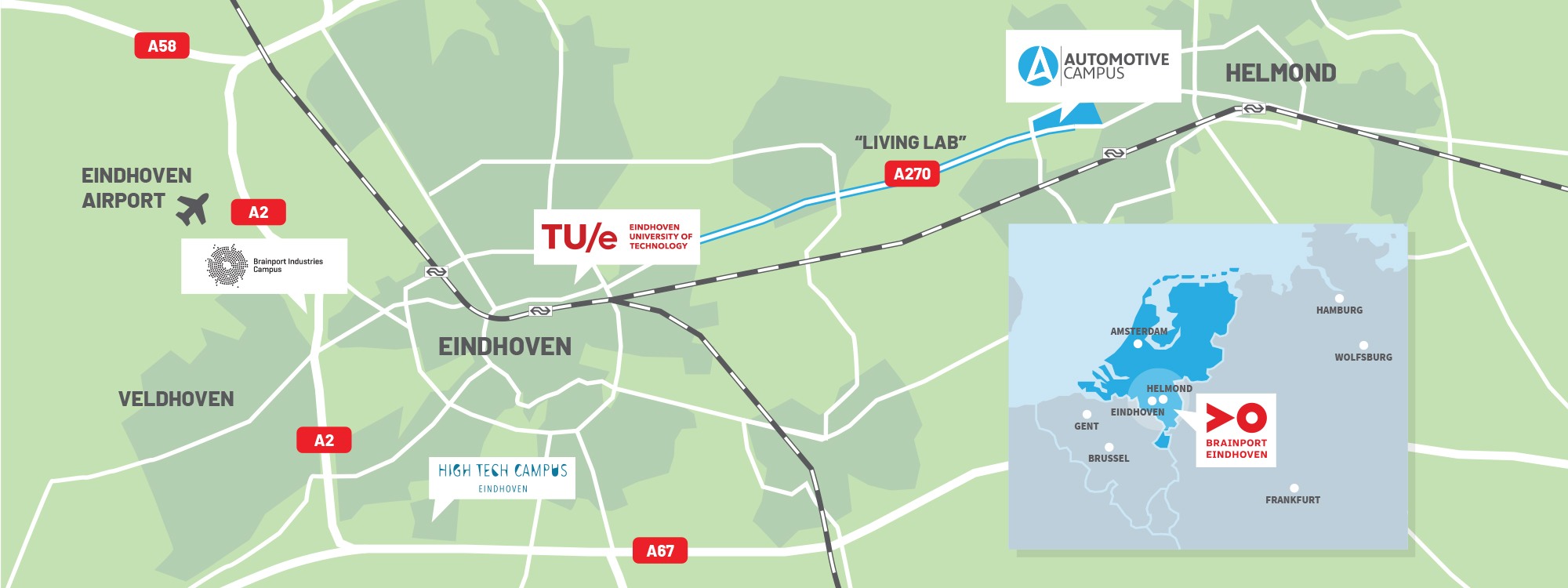
Automotive Campus brings together companies, knowledge institutions and governments to address the mobility issues of tomorrow. The KiM report confirms the importance of this collaboration. After all, solutions for energy savings through avoidance and shift affect several domains at once: technology, spatial planning, logistics, labour mobility and regulation.
As a catalyst, Automotive Campus stimulates the development and application of new concepts, such as:
- smart and light vehicle solutions,
- data- and software-driven mobility services,
- integration of mobility and energy systems,
- new business models around shared and efficient use.
Living lab for education, government and business
The new KiM report on energy savings in mobility emphasises that organisations are faced with complex choices regarding electrification, energy infrastructure, mobility use and affordability. Automotive Campus helps organisations on and around the campus to deal with this complexity by acting as a living lab: a shared practical environment in which mobility solutions are made concrete, applicable and scalable.
Within this living lab environment:
- organisations can try out new mobility and energy solutions in practice;
- education, research and business are connected to jointly translate issues surrounding vehicles, energy and mobility into workable applications;
- governments can test policies and measures together with campus partners, based on practical experience rather than just theory or models.
By combining learning, testing and application in a single environment, Automotive Campus contributes to a faster and better-informed transition to a future-proof mobility system.