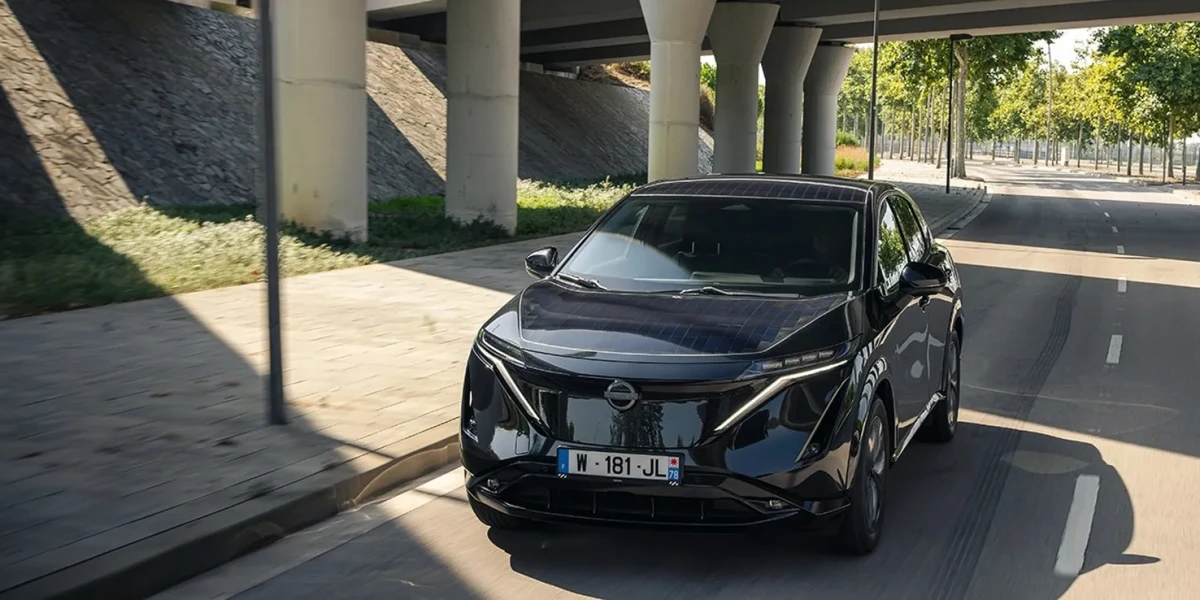
This week, former campus resident Lightyear, marked an important milestone in the evolution of sustainable mobility: a tangible step towards vehicles that can truly harness solar energy as part of their drivetrain. Through the recent collaboration between Lightyear and Nissan, Lightyear’s solar roof technology is now being applied in a real-world automotive context — making this innovation visible and scalable.
Lightyear’s journey is a remarkable one. Once a pioneering startup that was also active on Automotive Campus, the company faced significant challenges and the bankruptcy of its original vehicle manufacturing operations. But rather than stopping, Lightyear focused on what truly mattered: its groundbreaking solar charging technology. With a successful restart, that technology has now led to a concrete and promising result.
The integration of Lightyear’s solar technology into future vehicle platforms demonstrates that solar-powered mobility is no longer just a concept or a prototype. It shows how vehicles can generate energy while driving and parking, reducing reliance on external charging infrastructure and contributing to a more resilient and efficient energy system.
At Automotive Campus, we strongly believe that the future of mobility is much more than electric. Innovations like Lightyear’s solar technology are essential to:
- making better use of renewable energy
- reducing CO₂ emissions and dependency on fossil fuels
- lowering pressure on charging infrastructure and the energy grid
- strengthening the innovation ecosystem in automotive and energy technology
Lightyear’s progress shows how perseverance, deep-tech innovation and collaboration can drive real change. Pushing the boundaries of mobility and energy is shaping the future of our industry.
Read the press release via this link