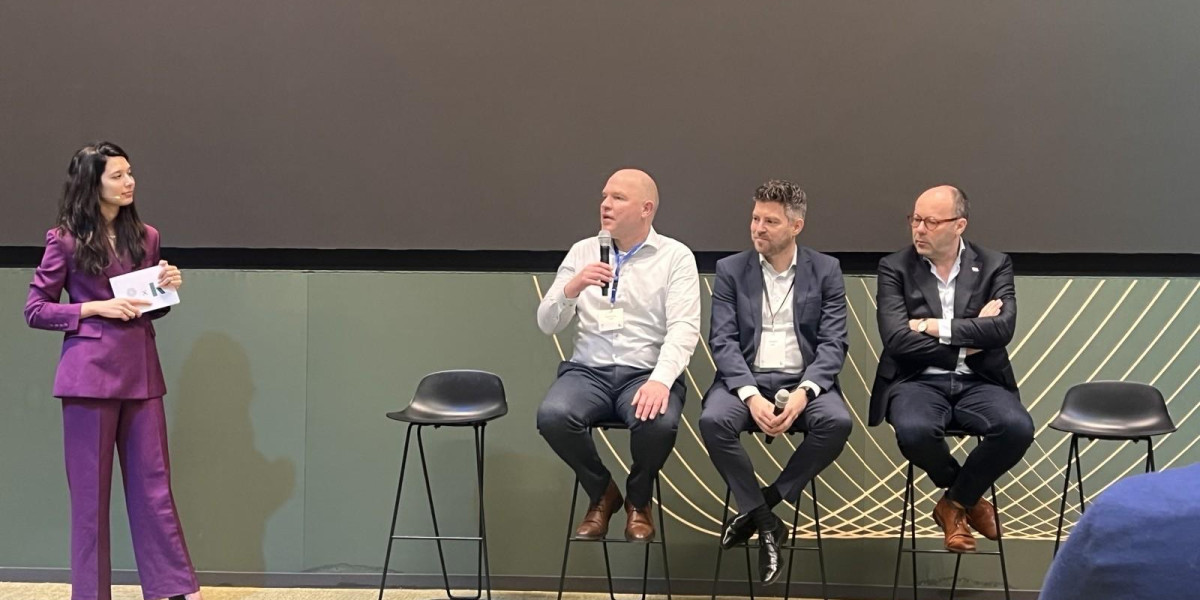
Last week, an inspiring breakfast session at the Brainport Industries Campus brought together public and private partners to discuss the future development of the campus and the wider region.
For the first time, a broad group of stakeholders – including ASML, government representatives, education partners and regional companies – came together to exchange perspectives on the future of the campus. The conversation explored how Brainport can continue to grow while balancing spatial, economic and societal challenges.
Managing growth in a constrained region
A key topic was the tension between economic growth and limited space in the region. According to Martijn van Gruijthuijsen, Deputy for Economy, Talent Development & Finance at the Province of North Brabant, difficult choices lie ahead. “If we want to address all the challenges we face, we would need two to three times more space than we currently have. The real challenge is how to integrate growth within the existing environment.”
But the discussion should go beyond housing alone. We also need to think about where people will work, how mobility and accessibility are organized, and how we collaborate across regional and administrative boundaries.
The strength of the ecosystem
For companies like ASML, collaboration across the value chain is essential. As they explained: Eighty percent of their machines are not made by them. They depend heavily on the industry and supply chain around them. This close cooperation between companies, knowledge institutions and government – often described as a multi-helix ecosystem – is widely seen as one of the region’s greatest strengths.
From high-tech to deep-tech manufacturing
Another theme was the evolving positioning of the campus. According to Huub Smulders, the campus should increasingly present itself as one unified ecosystem. “We may have gone a bit too far in thinking knowledge is our main export product. Ultimately, we want to strengthen both inventing and manufacturing here in the region.”
Looking ahead, the ambition is to broaden the campus profile – moving from high-tech manufacturing toward a wider deep-tech manufacturing ecosystem, with opportunities in areas such as energy systems and complex modules.
A campus that attracts people and ideas
For John Blankendaal, successful campuses are about more than buildings. “You want a ‘wow factor’. A place where people want to be – where education, companies and innovation come together under one roof.”
Although the breakfast session was relatively short, it marked an important moment where multiple stakeholders came together to exchange ideas and explore the next steps for strengthening the Brainport ecosystem.