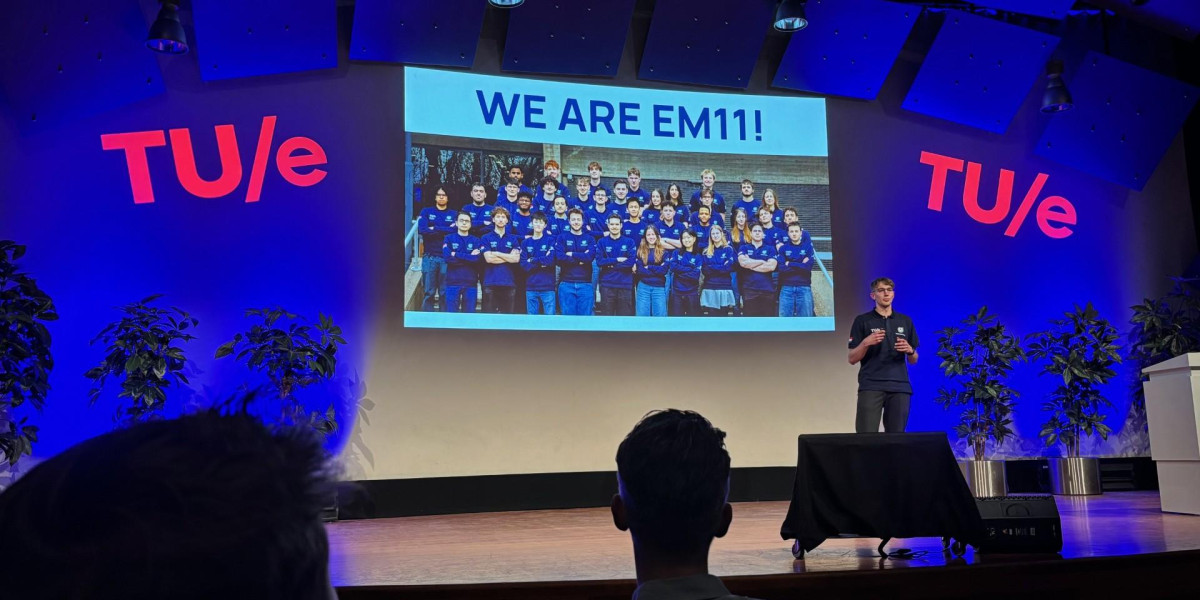
During the design presentation, the student team TU/ecomotive from Eindhoven University of Technology (TU/e) showcased an innovative step in the fight against air pollution. On behalf of Automotive Campus, we attended the unveiling of their latest vehicle concept.
Fine particulate matter (PM) poses a serious health risk worldwide. Each year, millions of deaths are estimated to be linked to this invisible form of pollution. These microscopic particles penetrate deep into the lungs and can even enter the bloodstream.
Notably, even electric vehicles are not entirely free from this issue. In addition to exhaust emissions, fine particles are also generated by the wear and tear of tires, brakes, and road surfaces.
From ‘less pollution’ to ‘active cleaning’
While the mobility sector has traditionally focused on reducing emissions, TU/ecomotive takes a different approach: a vehicle that actively contributes to reducing fine particulate matter while driving.
The concept combines three key innovations:
Weight reduction
By using a lightweight chassis and composite panels, the pressure on the road surface is reduced. This directly leads to less wear and tear and therefore less generation of fine particles.
Smart driving behavior through monitoring
The vehicle provides real-time feedback to the driver to optimize driving behavior, such as limiting harsh braking and sharp steering. This helps further reduce wear-related particulate emissions.
TRACE system for active capture
With the so-called TRACE system, fine particles originating from tires, brakes, and the road surface are actively captured during driving. Notably, this is achieved without the use of traditional physical filters, meaning no waste streams are created.
Innovation with impact
With this concept, TU/ecomotive demonstrates that the future of mobility goes beyond electrification alone. The team addresses a frequently overlooked problem and presents a solution that works both preventively and actively.
This approach highlights the importance of systems thinking within the mobility sector: not only focusing on energy sources, but considering the full impact of mobility on people and the environment.