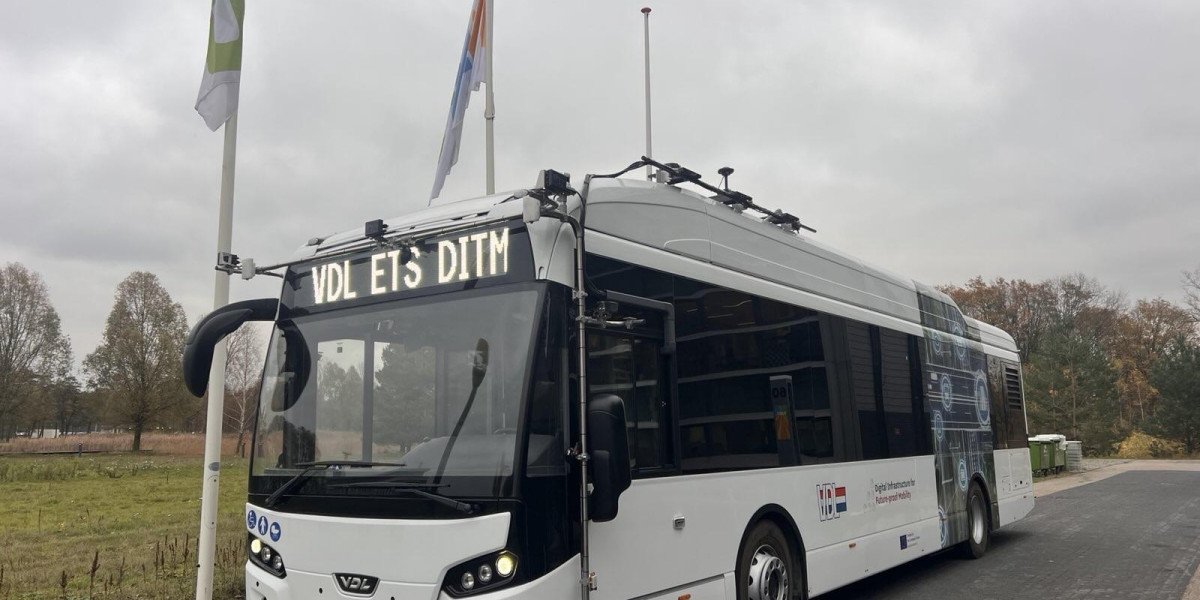
At the DITM (Digital Infrastructure for Future-proof Mobility) event hosted by NXP, industry leaders gathered to discuss the future of autonomous mobility and the urgent need for collaboration. The panel featured Ana Alanis from Brainport Development, Paul van Emmerik of RET, Edwin Nas representing RDW, and Jeroen van der Werf from VDL ETS. Their message was clear: if Europe and the Netherlands want to remain competitive, all stakeholders must act now.
The discussion highlighted two major hurdles slowing down the implementation of autonomous vehicles: the significant upfront investments required without clear timelines for return, and the lack of a comprehensive legal framework to support deployment. These challenges have led companies to focus on smaller, controlled environments first, such as autonomous yard maneuvering. This approach offers a practical business case and demonstrates that automation can deliver tangible benefits in logistics and operations.
RDW, the Dutch vehicle authority, currently operates within existing legislation and responds reactively to companies that bring forward new products. However, RDW is also investing internationally to build expertise in areas such as cybersecurity, ensuring that future autonomous systems meet stringent safety and security standards. The Ministry of Infrastructure has committed to supporting selected pilot projects, but the panel emphasized that government action alone is not enough. Market demand must drive acceleration, and that requires a coordinated effort across the entire ecosystem.
The urgency of this collaboration cannot be overstated. Europe lacks the capacity to move from prototype development to widespread public deployment, and without decisive action, the region risks falling behind Asia and the United States. “The time to act is now,” was the resounding call from the panel. Success will depend on every stakeholder—manufacturers, regulators, technology providers, and operators—taking responsibility and moving forward together.
Technology innovation was another key theme at the event. NXP showcased its imaging radar technology, which offers a compelling alternative to lidar. Imaging radar is not only capable of mapping the environment in remarkable detail and tracking objects ahead, but it is also approximately 100 times cheaper than lidar. This cost advantage could make autonomous driving significantly more affordable and accessible. The event also explored the role of digital twins in simulating and validating autonomous systems, further underlining the importance of advanced tools in accelerating development.
In conclusion, autonomous mobility is no longer a distant vision—it is within reach. But achieving it requires more than technology; it demands collaboration, investment, and a clear business case. Yard automation may be the first step, but real progress will only come when the entire ecosystem acts together. And that moment is now.