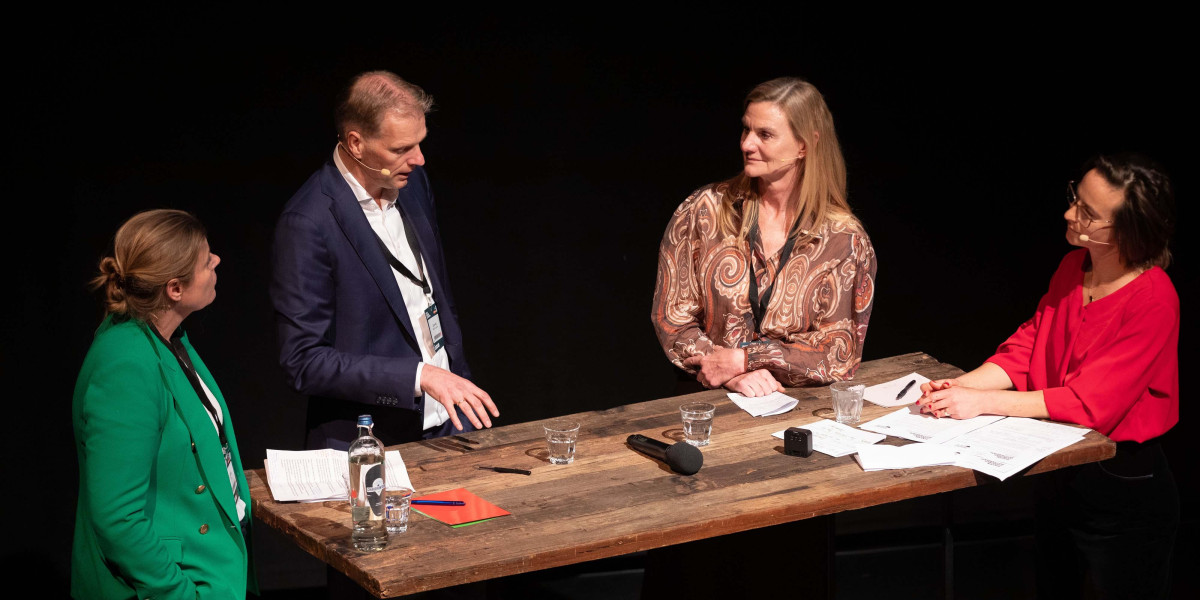
At this year’s Havencongres in Rotterdam, stakeholders from government, industry and knowledge institutions came together to explore how Europe can strengthen its economic resilience and future earning capacity. Representing Automotive Campus, Managing Director Sascha Bloemhoff attended the event. Contributions from speakers including Derk Boswijk (State Secretary of Defence), Lars Mikael Jensen (A.P. Moller-Maersk) and Han de Groot (CEO of Volt) reflected a shared theme throughout the day:
How do we translate ambition into execution in an increasingly complex system?
A growing sense of urgency
Several speakers reflected on the increasing urgency across domains such as defence, energy and digital infrastructure. Derk Boswijk illustrated this with a historical perspective, referring to the rapid scaling of industrial production during World War I. In today’s context, similar challenges arise, for example in relation to the war in Ukraine. The ability to respond at scale is no longer just a matter of resources, but also of organisation and coordination. A quote by President Roosevelt, shared during the session, captured this sentiment:
The best thing you can do is the right thing. The second-best is the wrong thing. The worst thing is doing nothing.
It underlines the importance of moving forward, even in situations where not all variables are certain.
Structural themes shaping the future
Discussions during the congress highlighted four interconnected themes that are shaping Europe’s long-term development:
- Demographic developments
- Digitalisation
- Energy and climate
- Security and resilience
These themes are closely linked and influence both economic strength and societal stability. At the same time, several underlying conditions were discussed that impact the ability to act effectively:
- Investment in infrastructure
- Availability of talent and skills
- Regulatory frameworks
- Access to and deployment of capital
While each of these areas is developing, alignment between them remains an important point of attention.
The role of collaboration in complex systems
A recurring topic throughout the day was the importance of collaboration across sectors. Multiple speakers reflected on the challenges of fragmentation and the need to connect perspectives from government, industry and knowledge institutions. With a wide range of initiatives and projects already identified, the focus increasingly shifts towards coordination and execution.
As discussed during one of the panels, understanding both ambitions and concerns of stakeholders is essential to move forward together. Creating a shared sense of urgency can support alignment and help accelerate decision-making.
The Port of Rotterdam as a strategic hub
The Port of Rotterdam was frequently highlighted as a key asset within the European ecosystem:
- Approximately 25% of containers transported include food
- Around 13% of energy flows through Rotterdam
This underlines the port’s importance from an economic perspective, but also in terms of security and resilience. Speakers also addressed the evolving role of the port:
- Supporting the transition towards more sustainable and circular industry
- Expanding its role in logistics, including military mobility
- Strengthening both physical and digital resilience
At the same time, topics such as the investment climate for industry and energy availability remain important considerations for the future.
Industry perspective: towards integrated value chains
From an industry perspective, Lars Mikael Jensen of A.P. Moller-Maersk shared insights on how global logistics is evolving. He pointed to the increasing need for:
- · Closer collaboration between customers and suppliers
- · More integrated and efficient value chains
- · Continuous adaptation in response to changing circumstances
Innovations such as alternative fuels, new shipping concepts and optimised port operations illustrate how the sector is evolving. In this context, Rotterdam continues to play a central role as a European logistics hub.
Energy transition in practice
The energy transition was discussed from a practical and implementation-oriented perspective. Organisations such as Shell and Gasunie shared ongoing developments, including:
- Investments in hydrogen and offshore wind
- Development of new energy infrastructure, such as hydrogen pipelines
- Large-scale carbon capture and storage (CCS) projects
These initiatives demonstrate how the transition is taking shape step by step, while also highlighting the importance of long-term investment conditions and collaboration. At the same time, emerging technologies, such as small-scale nuclear applications, were mentioned as potential additions to the future energy mix.
Digital infrastructure and AI
Another key topic was the rapid development of artificial intelligence and its implications for Europe. Han de Groot (Volt) highlighted the growing importance of compute capacity as a driver of economic productivity. With a relatively small share of global compute infrastructure located in Europe, the topic of investment in digital infrastructure is gaining importance.
Concepts such as AI “gigafactories” illustrate how digital infrastructure is increasingly viewed as part of the industrial base, closely connected to energy systems and physical infrastructure.
Moving forward together
Across all sessions, the importance of moving from strategy to implementation was evident. This does point to the need for:
- Alignment between stakeholders
- Space for experimentation and innovation
- Long-term collaboration across sectors
The role of Automotive Campus
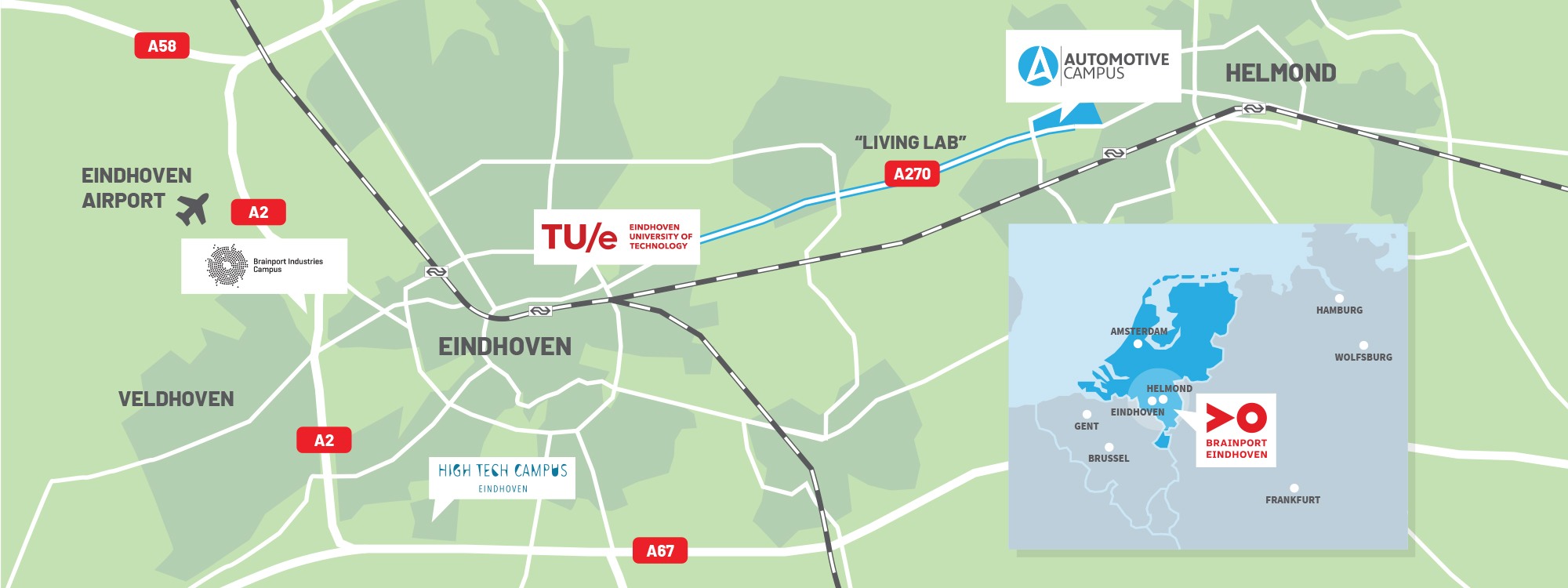
At Automotive Campus, this approach is reflected in how the ecosystem is organised. As an open innovation environment in the Brainport region, the campus brings together companies, research and education, and government to accelerate the development of smart, safe and sustainable mobility and energy solutions.
With a strong focus on real-life testing, validation and collaboration, Automotive Campus supports organisations in bridging the gap between innovation and application. By connecting stakeholders and providing access to shared facilities, ideas can be developed, tested and scaled more effectively.
Looking ahead
Havencongres 2026 highlighted both the opportunities and the complexity of the transitions ahead. Progress depends on how well different parts of the system, technology, infrastructure, policy and collaboration come together. Creating the conditions for that alignment will play an important role in shaping Europe’s economic strength and resilience in the years to come.