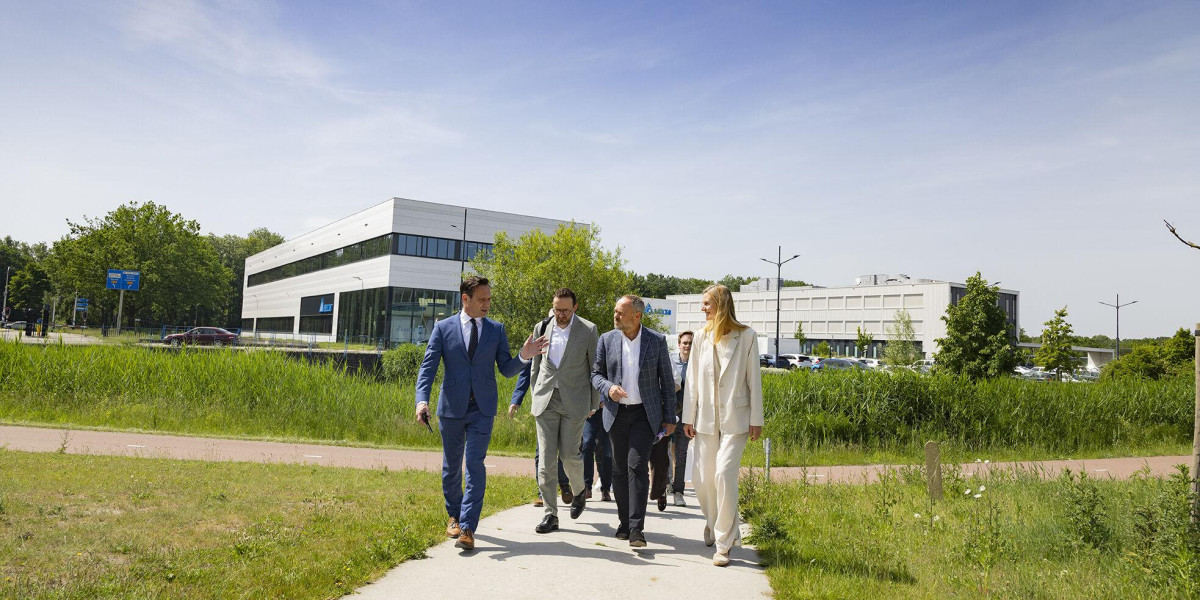
We recently welcomed members of the Dutch House of Representatives, representatives from the Municipality of Helmond and regional stakeholders for a working visit focused on innovation, mobility, digitalisation and Europe’s future competitiveness.
The visit offered participants an opportunity to experience firsthand how collaboration between industry, government, education and research is helping to shape the future of mobility. Through presentations and live demonstrations, visitors gained insight into a range of innovations being developed and applied within the Automotive Campus ecosystem.
The strategic importance of the automotive sector
The program opened with insights from Pim Grol, Managing Director of RAI Automotive Industry NL, who highlighted the significance of the automotive industry for both Europe and the Netherlands.
Across Europe, the automotive sector supports 13.2 million jobs and represents 10.3% of all manufacturing activity. In the Netherlands, the sector generates approximately €40 billion in annual turnover, provides employment for 45,000 people and accounts for 13% of all private R&D investments. Dutch manufacturers also play a leading role in heavy-duty transport, producing around 30% of all trucks above 16 tonnes operating in Europe.
These figures underline the importance of maintaining a strong innovation ecosystem and investment climate to ensure Europe remains competitive in a rapidly changing global market.
From education to innovation
One of the highlights of the visit was a presentation by Roel Akkerman, Director of Summa Automotive & Smart Mobility. He showcased the hydrogen-powered scale vehicle developed by students, which recently won a world championship competition.
The presentation demonstrated the value of hands-on education and the role young talent plays in developing future mobility solutions. By combining technical knowledge with practical experience, students are contributing directly to innovations in sustainable mobility.
Digital tools for smarter cities
Digitalisation was another key theme during the visit. Daniel de Klein and Luuk Misdom from the Municipality of Helmond presented the city’s Digital Twin, developed in collaboration with TNO and now further commercialised through spin-off Scenexus. During a live demonstration, visitors saw how the platform enables municipalities to model and analyse a wide range of scenarios related to traffic flow, noise levels, air quality and broader societal impact. By bringing different data models together in a single environment, cities can gain insights more quickly and make better-informed decisions. The Digital Twin significantly reduces both the time and costs associated with complex analyses, while supporting evidence-based urban development and mobility planning.
Research and innovation in practice
Visitors were also introduced to TNO MARQ by Bastiaan Knosse, showcasing how research and applied innovation continue to contribute to the development of future mobility systems. Together, the presentations highlighted how technologies developed within the ecosystem move from research and experimentation towards real-world application.
Collaboration as a driver for progress
The visit reflected one of the core strengths of Automotive Campus: bringing together businesses, governments, educational institutions and research organisations in a single innovation environment. By connecting expertise across disciplines, the campus creates opportunities to develop, test and validate solutions for the mobility and energy challenges of tomorrow.